How Moves Management traded post-event data cleanup for donor stewardship.
You know the Tuesday after the gala, the one where the energy of Saturday night has burned off, the spreadsheets are open, and someone is squinting at a stack of paper bid sheets trying to match a name to a paddle number while the acknowledgment letters that should already be in the mail sit nowhere near a printer. The finance team is asking for batches, the development team is asking for patience, and both of them are asking for coffee.
For most nonprofit leaders, that scene is so familiar it has stopped registering as a problem at all. It’s just what the week after an event looks like, and the calendar quietly bends to accommodate it.
Moves Management, a consultancy that supports small-to-medium nonprofits with data entry, data management, and the not-so-occasional messy database, saw that pattern play out across client after client. Their job is to help organizations turn event attendees into long-term donors, but the trouble was that the tools their clients had been using kept getting in the way of the very thing those tools were supposed to enable.
The week-and-a-half tax
The mechanics were familiar in their painfulness. After every event, gifts had to be exported, scrubbed, and imported into Raiser’s Edge. Fair market values had to be calculated by hand. The finance team needed batches because that’s how the finance team works, and most platforms either didn’t speak to Blackbaud properly or pretended to in ways that fell apart at the seams.
The actual work of stewardship, the thank-you letters, the donor follow-ups, the human acknowledgment that says we saw you, we noticed you, please come back next year, couldn’t begin until the data was clean. And the data wasn’t clean for at least a week and a half.
For a consultancy whose value sits in the speed and precision of what it delivers, that lag was a tax on every engagement.
A fast yes
The turning point wasn’t a sales pitch. It was a deadline.
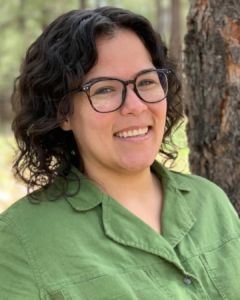
Janessa Jones, Database Manager, Moves Management
Two of the consultancy’s clients had events booked within three months of each other, and the team needed an event platform that could be stood up, integrated with Raiser’s Edge, and fully tested in time for both. There wasn’t room for a six-week onboarding cycle or a half-built integration that would inevitably split open at reconciliation.
What they got instead was Rebecca, a dedicated onboarding lead, and a setup process built around the assumption that integrating with a CRM is the whole point of an event platform and not a bolt-on you install later.
The knowledge base filled in the rest, and by the time the first event arrived, both clients were set up and, crucially, their data was already wired to land in the right place.
What happened on event night was the part the team didn’t quite expect to enjoy.
At one client’s event, ten volunteers fanned out across the room with iPads, selling raffle tickets directly from the floor, and not a single one needed a printed cheat sheet to do it. Check-in moved on phones, purchases happened on whatever device was closest, and the friction that usually clings to volunteer training (the what do I tap, where do I scan, what if it freezes of it all) simply wasn’t in the room.
“One of our clients just had 10 volunteers that each had an iPad. People were buying raffle tickets from them. You could do it from your phone, from a computer, from an iPad. That has been very helpful for clients.”
Janessa Jones, Database Manager, Moves Management
For a development team, that’s a quiet shift but a significant one, because volunteers stop being a bottleneck, donors stop standing in lines, and money moves through the room at the speed of the conversation, which is exactly the speed it should move.

Sasha Lewis, President and CEO, Moves Management
A reconciliation worth looking forward to
Then came the part that made Sasha laugh.
Reconciliation, which is to say the post-event slog of matching numbers, chasing variances, and importing gifts, had collapsed from a week and a half into one or two business days.
Gifts were already in. Fair market values were already calculated. The finance team had what it needed without the database manager having to build a batch by hand, and the new payout ID was solving the long-running friction between development and finance in a way that didn’t require either side to reinvent its workflow.
“Reconciliation was fun. That’s how much easier this has made it. What we get to enjoy is making sure all the numbers match, and now that’s what we’re spending our time on.”
Sasha Lewis, President and CEO, Moves Management
The downstream effect showed up where it matters most, which is in the mailbox. If a client’s event ran on a Saturday, acknowledgment letters could be in donors’ hands by Tuesday, not next week, and not the week after. Tuesday.
That isn’t a small change in a process. That’s a different relationship with donors, one where the thank-you arrives while the night is still warm.
What changed wasn’t workload. It was what work looked like
The obvious win was time, but the unobvious one was role clarity.
When data flows automatically and reconciliation takes a Tuesday morning instead of a fortnight, the consultancy’s hours stop being absorbed by repair work, and they get reallocated to the kind of stewardship that actually grows a donor file: clean acknowledgments, well-tagged campaigns, and follow-up sequences that fire on time.
The team has started looking ahead to what comes next, including auto-generated thank-you templates tied to specific campaigns and follow-up that triggers itself once a gift hits the CRM. The tools to automate the entire post-event runway are already in place; what changed is that there’s finally time to set them up.
“It’s been a fantastic tool. We’ve enjoyed onboarding the clients to it and watching them see the impact in saved staff time, which leads straight to great stewardship.”
Sasha Lewis, President and CEO, Moves Management
For a small consultancy, that’s the difference between a service that survives on heroic effort and one that can scale without quietly burning its team down to the studs.
Marketing shouldn’t need a developer to change a headline
Here’s a small thing that turns out not to be small at all.
Marketing teams can edit event pages themselves, not in the submit a ticket and wait three days sense, but in the open the page, drag the block, change the text, done sense.
“Setting up the event page is super easy. Marketing gets in there already, and it’s very user friendly. Nothing hard coded. It’s just drag and drop, edit text.”
Janessa Jones, Database Manager, Moves Management
For anyone who has ever waited three days for a developer to change the headline on a donation page, that isn’t a feature so much as an apology owed by every other platform on the market.
Where it lands
A week and a half of post-event work compressed into one or two business days, with acknowledgments out by Tuesday morning. Ten volunteers running raffle sales from iPads without a hitch. A finance team that gets what it needs without the database team having to rebuild it by hand, and a Raiser’s Edge integration that the team didn’t have to bend, patch, or work around. A marketing team that can update a page without filing a request.
When asked what they tell clients who are shopping for an event tool, both answers came easily.
“It is the only one I know that has a true full integration with Raiser’s Edge. It saves so much staff time that it’s got to pay for itself.”
Sasha Lewis, President and CEO, Moves Management“Setup is easy, marketing can get in, and the time savings combined with how simple it is to learn are what make it work.”
Janessa Jones, Database Manager, Moves Management
If you’ve been carrying the week-and-a-half tax for too many events in a row, it might be worth seeing what your Tuesday could look like instead.