How Nuvance Health Foundation built an event night where the team’s only job is to say “come on in.”
The week before a major fundraising event is typically supposed to be the busy one, chasing sponsorships, finalizing seating, sweating the details that make or break the night, and for most foundation teams, the week after is the one nobody warns you about.
There’s the export from the ticketing platform. The spreadsheet of paddle raise pledges. The stack of paper check-in sheets with hand-scrawled table numbers in the margins. Somewhere in a folder, a list of raffle winners.
And one person, usually the one who knows Raiser’s Edge best, sitting at a screen for the better part of a day, hand-keying donations and praying the totals tie out.
If that scene sounds painfully familiar, you already know what Terry Nackid was solving for.
The problem
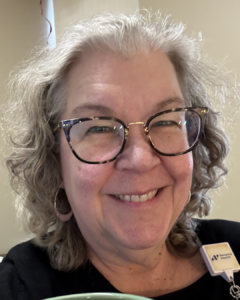
Terry Nackid, Director of Database & System Services, Nuvance Health Foundation
Terry Nackid is the Director of Database & System Services at Nuvance Health Foundation, now in the process of merging with Northwell Health into a 28-hospital system — likely the largest nonprofit health system in the country once the integration is complete.
Terry’s relationship with Raiser’s Edge goes back before her career started at Nuvance 6 years ago. The relationship spanned more than two decades, across more versions than most people in fundraising have been in the field.
That history matters. Terry has seen exactly how nonprofit event operations are built, and exactly where they fall apart.
Nuvance runs a steady calendar: one or two galas a year, multiple golf tournaments, and a long list of smaller, salon-style community events. Each one carries the same complexity:
- ticketing,
- sponsorships,
- raffles,
- silent auctions,
- paddle raises
And, until recently, each one carried the same backstage problem: nothing was actually connected.
Tickets were sold on one platform but donor records lived in another. The bridge between them was a person, a spreadsheet, and a deadline.
“It would be another system where someone would purchase the ticket, and then we would just have to manually enter everything into Raiser’s Edge and hopefully tie it out correctly.” — Terry Nackid, Director of Database & System Services, Nuvance Health Foundation
The fallout went well beyond the database team. Out on the floor, the same fragmentation hit guests.
Long lookups at check-in. Paper attendee lists. Table numbers written in pen as people stood waiting. Raffle tickets passed hand to hand. Credit card devices behind the registration table that needed to find Wi-Fi before they could find a donor.
For a foundation built on a premium donor experience, the friction was landing at the worst possible moment: the first ten minutes a major giver spent in the room.
“Stacks of lists, looking people up, having to give them a written table number,” Terry recalls. “It just wasn’t neat and clean.”
And the day after the event brought its own work. Half a day to enter the gifts collected in person, the checks, the cash, the paddle pledges scrawled on cards. More time still to reconcile what was in the events team’s spreadsheets against what had actually been paid. Pre-event “know before you go” emails had been sent largely by hand. Credit card information wasn’t being captured ahead of time. Every step that should have been automatic was someone’s manual project.
The turning point
Terry first heard Trellis present at Blackbaud’s BBCon. Plenty of event tools were on the floor. One detail caught her attention and didn’t let go.
Native integration with Raiser’s Edge. Not exports, not imports, not a written-from-scratch import script that runs on Tuesday morning. Real-time sync, a ticket purchase that lands in Raiser’s Edge as it happens.
“That was the part that convinced me to look deeper. The data didn’t have to be double-entered.”— Terry Nackid, Director of Database & System Services, Nuvance Health Foundation
For someone who’d spent twenty years working around the gaps between event platforms and CRMs, the pitch wasn’t a feature list. It was the absence of a problem she’d been solving manually for her entire career.
Inside the Mosaic Gala
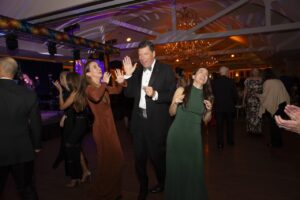
Six hundred-plus guests, and nobody backed up at the door. The team’s first words to every arrival were the ones Terry insists on: “Welcome, thank you for being here.”
The Mosaic Gala is Nuvance’s flagship event. Held last November in Danbury, Connecticut, it’s built around a community-health mission that resonates locally, and the room responds to it. The targeting on sponsor outreach is deliberate: every ask is matched to a leader who personally cares about the cause.
It works. Before the physical invitations hit the mail, the gala was sold out.By the night itself, the team had already cleared its $1M goal on the strength of table sponsors and major gifts.
“We like to go into the event already having hit our goal,” Terry says. “When community leaders give first, it’s an incentive.”
That changes what the rest of the evening is for. The paddle raise and auction stop being a revenue rescue mission and start being what they were designed to be: momentum builders. Pre-seeded leadership gifts, given visibly and early, set the tone for the room, and Terry has watched that lever work, again and again.
Six hundred-plus guests walked in that night and the first thing Terry’s team noticed was what didn’t happen.
The event flowed
There was no check-in line. As guests arrived, staff matched their name to a paddle number, checked them in, and a text landed on the guest’s phone within seconds: table number, paddle number, welcome.
“It was so easy, and there was never a big backup of people lined up waiting to get in.” — Terry Nackid, Director of Database & System Services, Nuvance Health Foundation
From there, the night ran on phones. Guests bought raffle tickets digitally from wherever they stood, no more stacks of tear-offs or staff handling them. A staffed table remained for anyone who preferred it, but few used it. When the paddle raised opened, guests with cards on file were charged instantly; those without received a text prompting payment after their pledge. QR codes around the room let anyone donate on the spot—no volunteer or form required.
When it came time to draw raffle winners, Terry pulled the entrants out of Trellis and ran a random number generator. Done.
“It puts all of that in control of the actual participant — the person who’s donating or making a purchase. And we don’t have to worry about handling credit cards or having all those machines.”— Terry Nackid, Director of Database & System Services, Nuvance Health Foundation
For teams who’ve spent twenty galas swiping cards on handhelds, going device-free can feel like the risky move. Terry sees it the other way around. “I love not having to deal with those devices. That’s just more that you have to track and that might go wrong, or might not connect to Wi-Fi.”
The unexpected benefit
The shift Terry didn’t fully expect was the one that showed up the next morning.
In the old workflow, someone on staff would lose half a day entering the gifts collected in person. Then, more time reconciling against the events team’s tracking. Then, more time is spent cleaning the data once it landed in Raiser’s Edge.
After the Mosaic Gala, that work didn’t exist.
“We had none of that. None of that had to be done.” — Terry Nackid, Director of Database & System Services, Nuvance Health Foundation
The handful of in-person transactions that did happen had been entered live during the event itself and pushed straight through to Raiser’s Edge. The data was already where it needed to be.
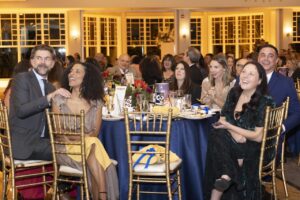
Every guest’s table number landed on their phone before they’d taken off their coat. Paddle number too, for anyone planning to raise it later.
The team didn’t take this on as a separate project. It folded into the rhythm of normal operations. “It just becomes part of our normal process, not an extra burden,” Terry says. For a database director, that sentence is closer to a vacation than a workflow change.
It also means her team gets something back that’s easy to undervalue at a healthcare foundation: time to think about the next event, the next donor, and the next strategy instead of cleaning up the last one.
The detail noticed, even if not articulated
Here’s the small thing.
Receipts.
Every donor who gave that night received a clear, IRS-ready PDF with a full breakdown — automatically. Ticket value separated from the deductible portion. Paddle raise pledge logged. Raffle entry noted. The kind of document a donor can print, drop into a tax folder, and never think about again.
In the old setup, receipts were a project.
“You end up doing a lot of customized receipting because it wasn’t coming out right,” Terry says. “It might have been in an email, but it wasn’t a beautiful statement that someone can print and put in their tax folder. It has everything broken out in a way that’s so clear that I don’t have to worry about that at all.”
Nobody puts receipts on a slide but they’re also the kind of thing that quietly shapes whether a donor feels handled with care, and whether they come back next year.
The outcome and Terry’s philosophy
By the end of the night, the Mosaic Gala had cleared its $1M goal. Six hundred guests had moved through the room without a single visible line at registration. Every transaction. every ticket, every raffle entry, every paddle raise pledge,and every receipt was already where it belonged.
For a database director with twenty years of context to measure against, the verdict was short: cleaner data, more accurate data, in real time. Better reporting, seating planning, and visibility into where the event is landing while it’s still happening.
But ask Terry what actually changed, and she answers a different question.
She talks about the guest. The donor who’s there because they care about the mission and who came to socialize, to celebrate the organization, to be in a room with people they know.
“They don’t want to be bogged down in the check-in process. They want to come in. Our job is to say, come on in.” — Terry Nackid, Director of Database & System Services, Nuvance Health Foundation
That’s the line and everything else is in service of it.
The merger with Northwell will bring its own complexity, multiple platforms, multiple workflows, conversations about how a 28-hospital foundation operation comes together. Terry has been clear about one piece of it: Trellis stays.
If your event calendar still ends with stacks of paper, half-days of data entry, and a Monday spent reconciling, the Nuvance story isn’t a cautionary tale. It’s the version that’s available.
See what your next event could look like — talk to the Trellis team.