What it feels like when teachers, parents, and grandparents can all use the same tool without a walkthrough.
You know the shuffle. A Square reader for ticket pickups, a Venmo handle scrawled on a fundraising postcard, a separate auction platform that requires a hired technician to babysit on event night. Three weeks before the gala, somebody on the team is reconciling spreadsheets by hand and apologizing to a parent who paid in two places.
The system technically works. That word, technically, is doing all the work in that sentence.
If you run advancement at a school, or you’ve volunteered for a gala committee long enough to have learned three different platforms by name, this is the part of the job nobody puts in the recruitment brochure.
The setup at St. Mark, and the slow realization that “it worked” was never the bar

Courtney Nordyke, Advancement Director, St. Mark Lutheran School
St. Mark Lutheran School sits on a Houston campus that serves roughly 540 students, from six-week-old infants to eighth graders, and it shares a deep, daily rhythm with the church next door.Courtney Nordyke, the school’s Advancement Director, has spent the last several years watching the school grow into double grades across the board, with the church and school running joint events that build community on both sides.
Three of those events drive the fundraising calendar. The biggest is the annual gala, the kind of evening that bundles ticket sales, sponsorships, table assignments, a silent auction, and a live auction into a single night. Each piece used to live in a different place, with money flowing in through Square, Venmo, and whatever else a parent had handy on their phone.
Four years ago, the gala ran on GiveSmart. It did the job, in the same way a borrowed pickup truck gets you home from the lumber yard. Last year, the team moved to OneCause/Cutego, partly because they had reached the point of needing a real human onsite to run the software on event night. That worked too, in that same load-bearing sense of the word. Behind the scenes, the system felt old. Volunteers struggled to find what they needed. Guests, especially the ones less fluent with their phones, struggled even more.
“Our previous systems worked, but we constantly got feedback afterward that they were confusing or difficult to navigate.” — Courtney Nordyke, Advancement Director, St. Mark Lutheran School
Then came Raiser’s Edge. As the organization started moving its donor data into a real CRM, the disconnected stack of point platforms stopped being a small annoyance and started being a structural problem. The gala couldn’t keep living in a separate universe from the database.
A login, and a feeling that something was different

Marianne Bethel, Parent Volunteer
Marianne Bethel arrived at the gala as a helper, the way many parents do, though with one wrinkle worth pausing on. Her daughter is a second grader at St. Mark, and the family hopes she’ll stay all the way through eighth grade. So far, so familiar.
The wrinkle is that, by day, Marianne is a product manager and UX/UI designer. That dual identity, room mom in one ear and product critic in the other, is the rare lens this story turns on. A parent gauging whether her community can actually use this thing. A designer gauging whether it deserves to exist.
She had been around Gala software before. She had learned the previous platform last year, walked through its support docs, sat with its quirks. Even with a tech background, finding what she needed took effort. It did the job, in the same sense everything did the job at St. Mark before this year, but it was not the kind of software a parent volunteer wanted to ask her own community to use.
Then Courtney told the committee they were moving over to a new platform, and shared the support resources and the website. Marianne dug in the same evening.
“All the questions I had before were readily available. As soon as I logged in, I remember thinking, ‘You guys, I’m so excited for this.’ It was just really intuitive.” — Marianne Bethel, Parent Volunteer
The turning point wasn’t a sales pitch or a demo. It was a parent who also happens to design software for a living, logging in on her own time and noticing, both with the parent ear and the designer ear, that nothing needed to be explained to her.
What the night actually looked like
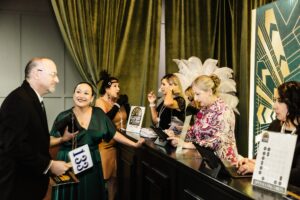
Three years ago, a contracted specialist stood with a laptop. This year, two teachers with a five-minute refresher. The line item for onsite software help is gone from the budget entirely.
Here is the part anyone who has run a school gala will appreciate. There was no contracted onsite specialist. There was no line item for a vendor to send a person with a laptop.
Instead, Courtney’s team trained the teachers the week before the event. The evening of, a five-minute refresher in the hallway. Then everyone scattered to their stations and ran with it.
Two specific people sat in Marianne’s head as she watched the gala unfold. Her eight-year-old daughter, the St. Mark’s second grader, who could probably have set the platform up herself given an afternoon. And her mother-in-law, who is not an iPhone person, and who at most family gatherings can be counted on to need help with anything that involves a tap and a confirmation screen.
Both of them moved through the platform without a hitch. The mother-in-law placed a bid, raised her bid, and gave, all without flagging anyone down.
“If an eight-year-old can understand how something works, that’s a pretty good sign.” — Marianne Bethel, Parent Volunteer
The same pattern showed up across the room. Grandparents, the donors most likely to abandon a confusing checkout, moved through bidding and giving on their own. The team noticed it in real time, and noticed the absence of the small fires they had spent prior galas putting out.
Backend, frontend, community, staff. One tool, and no translator required.
What they didn’t expect to gain

Every paddle raised flowed straight into the donor record. The week of post-event reconciliation the team used to absorb after each gala simply didn’t happen this time.
The integration piece was the part Courtney had gone shopping for. What she hadn’t expected was what happened to her workdays the morning after the gala.
Information was instantly there. Reports could be pulled, sliced, exported, and handed off without the usual week of reconciliation between Square exports, Venmo screenshots, and auction platform CSVs. The data showed up clean because it had lived in one place the whole night.
“Instead of bouncing between systems and trying to reconcile everything manually, we finally had a process that felt connected.” — Courtney Nordyke, Advancement Director, St. Mark Lutheran School
For Marianne, the unexpected gain was different and worth naming. Feedback she submitted, the kind of small UX suggestions a designer can’t help but write down, was met with a specific response. That’s a great idea, we’ll take it to product. For anyone who has worked in product, that sentence either is a real sentence or it isn’t. At St. Mark, it was. Same-day responses from support. Notes that actually made their way into the roadmap. A founder, Justin, who was on the first call and on the last.
The detail that doesn’t make it into the brochure
Here is the small thing most case studies skip. The platform looked like it had been made by people who cared what it looked like.
The interface was the kind a parent would not be embarrassed to ask a grandparent to use. The flow felt designed, not assembled. To a UX professional, the difference is unmistakable, and to a donor who simply wants to bid on the silent auction without squinting, it is the entire experience.
“From a product perspective, if you need endless walkthroughs and documentation, then maybe the product wasn’t designed intuitively in the first place.” — Marianne Bethel, Parent Volunteer
That observation is the one no vendor will offer, because no vendor is going to indict the category. A parent who also works in product will, and she did.
Where it leaves them
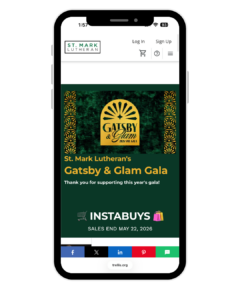
From four platforms and a hired technician to two teachers and a five-minute refresher. One Raiser’s Edge integration that finally pulls its weight.
The three fundraising events at St. Mark now run on Trellis, talking to one CRM, with no rented technician onsite. The gala still has its silent auction, its live auction, its tickets, its sponsorships, its tables. What is gone is the apologetic email afterward, the manual reconciliation, the parent who paid twice in two systems, and the quiet drag on the team’s time the following week.
Asked what she’d say to another school weighing the change, Courtney didn’t lead with a feature.
“Schedule the first meeting and you won’t look back. When leadership cares that much, you can feel it throughout the whole company.” — Courtney Nordyke, Advancement Director, St. Mark Lutheran School
If your gala still needs three platforms and a hired hand to make it through the night, it might be worth one conversation.