How a three-person events team went from two weeks of post-gala reconciliation to closing the books by Friday — the gala was Tuesday.
Rebecca Rowland leads event fundraising at Kids’ Food Basket with a team of two. Together they manage more than fifteen events a year: two galas, a 5K, a summer full of farm-to-table dinners, and small community gatherings that often come together with only a week’s notice.
For two years, the week after every gala looked the same. Paper piled up, the spreadsheet couldn’t be trusted and the data team spent two weeks reconciling before anyone knew how much the night had actually raised.
This spring, with the integration of Trellis, reconciliation was done by Friday from the gala that was Tuesday.
When Every Guest Got Entered Twice
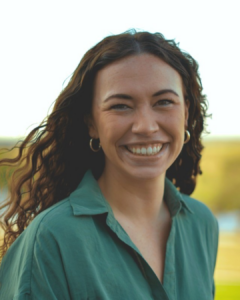
Rebecca Rowland, Event Planner, Kids’ Food Basket
Before, Rebecca’s team ran events on a scheduling platform local to Michigan, paired with Raiser’s Edge as their donor CRM. The two never talked to each other well. Every guest, every table assignment, every credit card number had to be entered twice: once into the event platform, once into Raiser’s Edge, by hand, after the fact.
Credit card information was the worst part. Their previous platform couldn’t save it ahead of time, so at check-in for a 400-person gala, volunteers were asking donors for card numbers on the spot and typing them in while a line built behind them.
Reconciliation, tracking down who paid what and matching it to Raiser’s Edge, took at least two weeks after every event. For an organization running fifteen-plus events a year, that meant Rebecca’s team was almost always reconciling one event while trying to plan the next.
A Platform That Finally Talked to Raiser’s Edge
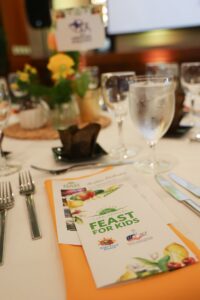
The program for Kids’ Food Basket’s 23rd Annual Feast for Kids, the gala that closed its books by Friday instead of two weeks later.
Rebecca went looking for something more robust that could actually integrate with Raiser’s Edge instead of fighting it. She ran product interviews with a handful of platforms. Trellis’s Raiser’s Edge integration stood out immediately, along with the ability to turn processing fees on or off event by event. It wasn’t a hard decision. It was, as she put it, just what they needed.
The rollout still made her nervous. Her team had used the old platform for as long as they’d worked there, and change is change.
Four Hundred Guests, Nine Staff, Almost No Line
Feast for Kids, Kids’ Food Basket’s spring gala, was the first real test: 400 guests, a live auction, and a room full of volunteers who’d never touched the new platform before. Nine staff worked the check-in table. New users watched a handful of training videos beforehand and never once got stuck.
At each check-in station, a small green symbol did the work that used to take a conversation: it meant the guest’s credit card and table number were already on file, because the team had been able to text donors ahead of time and let them save that information straight to their account. Nobody had to read a card number out loud. Lines that used to stretch far past comfortable now moved through in under five minutes.
The auction itself: a live auction that raised roughly $25,000, and a paddle raise that brought in more than $70,000. Feast for Kids closed the night at over $180,000, in line with what the gala usually raises, a little more than the year before, on top of a completely different check-in and checkout experience.
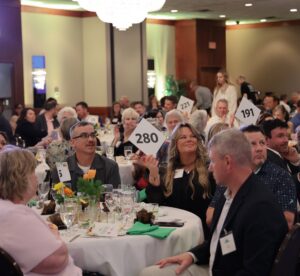
Bidder paddles go up during the live auction. Most of the guests in this room walked in with their card and table information already on file.
The Emails That Stopped Coming
The bigger shift showed up after the event ended. Reconciliation, the two-week grind that used to eat into planning time for the next event, was done by Friday. The gala happened Tuesday.
It changed who had to ask Rebecca for information, too. Gift officers who don’t touch the event platform used to email her constantly: who’s coming, what did this sponsor give, can you send the guest list. Now that data lives inside Raiser’s Edge automatically, they check it themselves.
“Since it links right to our event portal in Trellis, gift officers just go there and all the information’s there. They love not having to bug us.” — Rebecca Rowland, Event Planner, Kids’ Food Basket
It even changed who could answer the phone. Sponsors calling in to pay by card used to have to go through Rebecca specifically. Now any staff member can pull up the donor’s name, watch it match automatically to their existing Raiser’s Edge record, and take the payment without re-asking for an email or address that was already on file. For sponsorships that used to route through a separate manual payment system, one that charged Kids’ Food Basket extra in processing fees on top of everything else, that whole workflow now runs through the same platform as the rest of the event.
The pattern held beyond that first gala, too. Kids’ Food Basket’s other events, the summer farm-to-table dinners, the smaller community gatherings, have started raising more than they used to. Some of that is a simpler process. Some of it is donors committing to more events in a year, after the team reworked sponsorship benefits to make them a little more worth a second or third check. And some of it is donors who’ve learned the system once and stopped needing to be walked through it again: they buy tickets online, already matched to their saved information, without a single email back and forth.
The Fix That Never Makes a Feature List
Ask Rebecca what she’d tell another event planner considering Trellis, and the first thing she brings up isn’t a headline feature. It’s a five-minute conversation with her Trellis contact that saved her five separate emails: adding a custom question to the registration form so sponsors upload their own logo, instead of Rebecca chasing it down one email at a time.
It’s the kind of fix that never makes a feature list, but it’s the one she mentions first.
The Week After, Finally Different
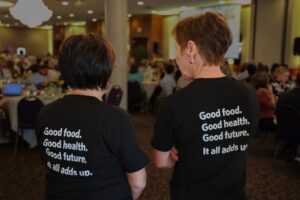
Kids’ Food Basket volunteers at Feast for Kids. The organization runs fifteen-plus fundraising events a year to support its work across West Michigan.
A year in, the ripple effects keep showing up. Donors who attend multiple events don’t re-enter their information anymore; some don’t even ask Rebecca questions before buying a ticket online. Fewer duplicate records mean more real donor relationships surfacing instead of getting lost in a spreadsheet. And the six to eight hours Rebecca used to spend scrubbing post-event data by hand now happen automatically, all the way through the event, freeing her to do the work only she can do: figuring out which guests are worth a personal follow-up, and noticing when two people who came together turn out to work at the same company.
Kids’ Food Basket still runs two galas, a 5K, a growing slate of farm-to-table dinners on its own organic farms, and more small community gatherings than most three-person teams could manage. Those farm dinners aren’t incidental to the mission, either: the same produce grown on Kids’ Food Basket’s own ten-acre organic farms goes straight into the dinners the team hosts each summer, and ticket revenue from those dinners helps fund fresh produce for local food pantries that would otherwise be stuck serving canned, shelf-stable meals. It’s the kind of detail that makes the fundraising feel like an extension of the mission rather than a separate ask.
The events haven’t gotten smaller. The week after them finally did.