The story behind a 40% silent auction increase, a Raiser’s Edge integration that changed how the team works, and a development team that finished the night relaxed, well-fed, and ready to do it again.
Every event manager who has run a gala knows the particular dread that sets in around 5 p.m. on the day of the event. You are simultaneously caterer-wrangler, volunteer-firefighter, and the person your board is going to track down the moment anything goes sideways. The fundraising is almost secondary to the logistics, which is a strange thing to say about an event that exists entirely to raise money.
And then there is the aftermath: the spreadsheets, the outstanding pledges, the thank-you calls that were supposed to go out in April and are somehow still on a to-do list in December. One event can generate months of administrative recovery. Most teams just absorb it as the cost of doing business, right up until someone finally says, enough.
That was the turning point for Chelsea Eifert, Partnerships and Events Manager at Meals on Wheels of Southwest Ohio and Northern Kentucky, heading into the organization’s third annual Meals Madness Gala.
Building Towards the Right Formula
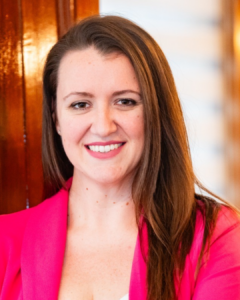
Chelsea Eifert, Partnerships and Events Manager at Meals on Wheels of Southwest Ohio and Northern Kentucky
The Meals Madness Gala had been building toward something.
Year one set the tone for guest experience. The team worked with a third-party digital platform and invested heavily in making the night genuinely enjoyable, and it was. That foundation mattered. What they learned was that platform fit and staff training needed to be part of the equation from the start, not assumptions going in.
Year two brought the operational focus. The team leaned into what they could control directly: silent auction management, ticket processing through Blackbaud, paddle raise tracking handled in-house. Fundraising numbers improved. The event was running on their terms. What became clear was that the next step was connecting all of those moving parts — tickets, auction, donor data, into a system that could hand everything off cleanly at the end of the night.
Chelsea Eifert joined as Partnerships and Events Manager in August, stepping into an organization that had already done the hard work of figuring out what they needed. Her job heading into year three was to find the platform that could deliver it.
The Moment Something Had to Change
Chelsea came into year three with a clear-eyed assessment: the event needed a platform that could handle the full revenue picture: tickets, sponsorships, silent auction, paddle raise — and then hand that data cleanly to their CRM, Raiser’s Edge, without anyone having to rekey it. She needed something guests would actually use without prompting, and something her volunteer team could learn in an afternoon.
Trellis checked every box. The Raiser’s Edge integration, in particular, was the deciding factor.
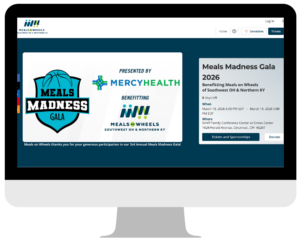
Chelsea and her Trellis rep Rebecca mapped out the full guest communications schedule weeks before the gala. By the time the first welcome email went out, every touchpoint — from ticket confirmation to silent auction nudges, was already planned and queued.
What the Night Actually Looked Like
The shift was visible before anyone even walked through the door.
Because Trellis allowed table purchasers to register their own guests directly, Chelsea arrived on the day of the gala already knowing roughly 90 percent of her attendees by name. That alone was a first. In previous years, tracking down guest details had been a week-long scramble of emails and phone calls; this year, the list practically built itself.
The silent auction told a similar story. By opening the bidding publicly in advance, the team could promote individual items to supporters who weren’t planning to attend in person. By the time the first guests checked in, Chelsea already knew her silent auction revenue. That number kept climbing throughout the evening as Trellis pushed real-time notifications to guests’ phones: an item with no bids yet, a lot that was heating up, a reminder that time was running out on something someone had been watching. Participation happened from the dinner table, from the bar, from wherever guests happened to be standing. Silent auction revenue rose 30 to 40 percent compared to the previous year.
“We could publicly promote items because you didn’t have to be physically present to participate,” Chelsea noted. “I already knew my silent auction revenue before the event even started.”
Check-in, which can quietly derail an entire evening if it backs up, ran as smoothly as anything Chelsea had seen. With 300 guests, she had three volunteers on laptops and three more managing name tags and programs. The queue never grew deeper than two people. The system asked each volunteer to do essentially three things: search for the guest, choose one of three actions, and confirm the information. That was it. Even without the volunteer training videos, something Chelsea has already put on the list for next year, the team worked through the room without friction.
By the time dinner was served, the staff had stopped firefighting and started eating.
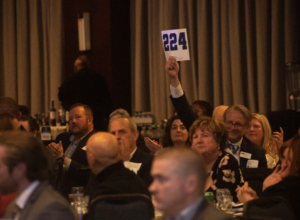
Not every raised paddle in the room came from a table sponsor. Underwriting opportunities staggered down to a few hundred dollars meant newer corporate partners and out-of-town supporters could still show up with visibility, building a pipeline Chelsea expects to convert into full table commitments in the years ahead.
The Gift Nobody Predicted: Clean Data and Calmer People
The downstream benefits of a well-run event are easy to undervalue in the moment, but they compound quickly.
Before Trellis, the organization had no reliable way to follow up with every donor who made a pledge. Phone numbers were missing. Email addresses were incomplete. The pledge-versus-payment tracking lived in a patchwork of spreadsheets that didn’t talk to each other and certainly didn’t talk to Raiser’s Edge. Finance and development were working from different pictures of the same event.
After the gala, outstanding pledges sat at roughly 10 percent, a fraction of what they’d been in previous years, and the team could follow up on every single one because they finally had clean contact information. The thank-you calls went out on time. The stewardship cycle could actually start when it was supposed to.
The effect on the team was noticeable and immediate. The anxious, dread-it energy that had built up in the weeks before previous galas simply wasn’t there this year. “I could tell how relaxed the team was,” Chelsea said. “Before the event, everyone was anxious and dreading the gala. By the end of the night, everyone had actually eaten dinner and spent time networking.” It wasn’t a single thing that changed; it was the absence of chaos, which turned out to matter more than anyone had acknowledged.
The Thing That Doesn’t Usually Get Said About Donor Experience
There is a persistent assumption in the nonprofit world that donors will tolerate a clunky digital experience, or prefer paper, or simply resist anything that feels like technology. Chelsea had heard some version of this concern, and she went in ready to manage it.
She didn’t have to.
Every guest, whether they bought a single ticket or anchored a full sponsorship table, received the same welcome email framing Trellis as the home base for everything gala-related. The framing mattered. Guests arrived oriented, not confused. Table purchasers navigated the registration flow confidently enough to help their own guests do the same. The system was, as Chelsea put it, “the iPhone of event software.” Donors used it not because they were asked to but because it was genuinely easier than the alternative.
That ease of use also opened up the sponsorship structure in ways the previous system couldn’t have supported. Because Trellis could process any type of transaction cleanly, the team built out an entire tier of underwriting sponsorships tied to the venue: jumbotron placements, concession sponsorships, halftime slideshow features, photo booth packages. A corporate partner who wasn’t ready for a full table commitment could still show up with visibility and a defined experience. Smaller sponsors at a few hundred dollars had a clear entry point; the pipeline for future table-level partners started building itself.
The Numbers, and What They Actually Mean
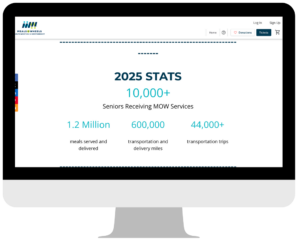
The reconciliation figures don’t capture what Chelsea called ‘sweat equity — maybe some tear equity too.’ For the first time, pledges and payments lived in a single dataset, and the development assistant and finance team could see the same picture from the moment the event closed.
The third annual Meals Madness Gala grossed $260,000, well above the team’s goal. Silent auction revenue climbed 30 to 40 percent. Outstanding pledges dropped to roughly 10 percent of total commitments. The follow-up cycle started on time, with complete contact data, for the first time.
But the number that might matter most going into year four is harder to quantify: a team that finished the night relaxed, well-fed, and genuinely excited to do it again.
Chelsea is already using Trellis for the organization’s fall pie sale, adapting the platform into an order form to handle a completely different kind of event. The Raiser’s Edge integration works the same either way.
If you’re still tracking pledges in a spreadsheet, or watching your silent auction table empty out at 9 p.m. because guests stopped walking over to check the bid sheets, or spending November chasing payments from a March event, it might be worth seeing what your gala looks like when the platform gets out of the way.
“The fact that Trellis connected so easily with Raiser’s Edge saved us a massive amount of time, confusion, and effort.” — Chelsea Eifert, Partnerships and Events Manager, Meals on Wheels of Southwest Ohio and Northern Kentucky