What happens when your platform finally works as hard as you do.
Running fundraising events for schools takes more than a great team, it takes technology that doesn’t let you down when it matters most and doesn’t cost you more than it is worth.
Not just a cost in subscription fees. In the $2,000 you spend on a tech babysitter. In the hours your staff burns on workarounds. In the donor relationships you can’t quite see clearly because the data lives in three different places. In the evening you spent managing a software crisis instead of working the room.
That’s where Ashley Istre was. And it’s where a lot of organizations stay, longer than they should, because switching feels like a risk and staying feels like the devil you know.
Here’s what happened when she finally made the call.
The hidden cost of bad tech for fundraising events for schools
There is a specific kind of dread that lives in the stomach of whoever runs the biggest fundraiser of your year. It is not quite fear and not quite excitement. It is the particular tension of someone who knows exactly how many things could go wrong, because she has watched most of them go wrong before.
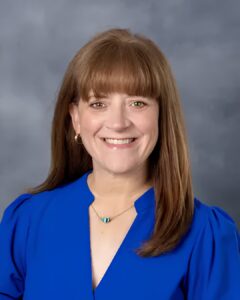
Ashley Istre,
Special Events Coordinator,
The Dunham School
Ashley Istre knew that feeling well. As Special Events Coordinator at The Dunham School, a PreK through 12th grade private Christian school in South Louisiana with nearly 900 students, she ran the school’s full fundraising calendar: ten events a year, three of them flagship. A fall gala that needed to raise $150,000. A golf tournament for the Alumni Association. A spring carnival that pulled grandparents, parents, kids, and local businesses into one joyful, chaotic afternoon. Together, these were the financial heartbeat of a school that depended on its community showing up and giving generously.
And every single year, as the fall gala approached, Ashley did something she felt was absolutely necessary: she wrote a check for $2,000 to hire someone whose only job was to sit at a laptop and watch the software.
Not to greet guests. Not to manage volunteers. Just to make sure the technology didn’t fail her again.
Because once, in a year she would rather forget, the silent auction was supposed to close automatically at 10pm. It didn’t. The clock struck ten, the bids kept coming, and the room descended into exactly the kind of confusion that haunts an organization for years afterward. Since then, she needed a human failsafe. Someone who could click the button if the software wouldn’t.
If you lead a social enterprise, you know what it costs to run operations like this. Not just the line item. The distraction. The overhead that exists only because the tools aren’t doing their job.
When “good enough” stops being good enough
The frustration wasn’t limited to one bad night. For anyone managing fundraising events for schools, it shows up everywhere. Reporting workflows left her committee overwhelmed. Donor data sat disconnected from Raiser’s Edge, the CRM her accounting team relied on and would not replace. Over time, small workarounds piled up until they became routine.
When a Trellis representative reached out, the timing was precise. Ashley didn’t ignore it. She called back. She was already evaluating alternatives and had one key requirement: integration with Raiser’s Edge.
Trellis met it. In fact, it was the only platform that did.
“Y’all are the only one that integrates with Raiser’s Edge, and that is something… that’s what kind of sold us.”
Ashley Istre, Special Events Coordinator, The Dunham School
She moved forward, then waited for October to arrive.
The night the software actually did its job
The fall gala at The Dunham School is anything but simple. With 180 silent auction items ranging from modest gift cards to high-value VIP experiences, a live auction running alongside them, and corporate sponsors whose guests must be accurately tied back to their organizations, the margin for error is thin. Add to that a room full of returning parents, grandparents, and business owners who quickly notice when something feels off, and the pressure becomes constant.
Ashley came into this year telling herself she was ready. What she didn’t say out loud was that she was still bracing for something to go sideways.
It never did.
Guests arrived and were checked in almost instantly. The system pulled up their information without delay, linked sponsors to their companies in real time, and, as soon as each guest was processed, sent a text that placed them directly into the silent auction. There were no accounts to create, no passwords to reset, and no friction between arrival and participation.
The room moved the way it was supposed to. For fundraising events for schools with 180 auction items, live bidding, and corporate sponsors to manage, that kind of seamless flow doesn’t happen by accident. No lines formed. No confusion spread. Just a steady flow of guests moving through check-in, marked by a simple green check on the screen.
For the first time that evening, Ashley could breathe.
“The green button with the check mark lit up, and we knew we were good to go. That’s all I needed to see.”
Ashley Istre, The Dunham School
When the silent auction closed at 10 PM, it did so automatically and exactly on time. Ashley wasn’t stationed behind a laptop or relying on a technician to manage the system. She was on the floor, running the live auction, moving between tables, entering bids, and fully engaged in the event itself.
The additional hire she once depended on was no longer necessary. The $2,000 cost stayed in the school’s budget.
For the first time, the event didn’t just run. It worked the way she had always needed it to.
The part nobody expects: actually knowing your donors
What Ashley got on the night of the gala was peace of mind. What she got in the weeks and months afterward was something no one talks about enough when it comes to fundraising events for schools and other organizations: a completely new way of understanding her donors.
This is where it gets interesting for an organization that is thinking beyond the next event.
With Trellis synced directly to Raiser’s Edge, every piece of information from every event fed automatically into the same database her accounting team had always used. Who attended. Who bid on what. Who won which auction item. Which raffle purchasers added a spontaneous donation at checkout. For the first time, Ashley could sit down at her desk, open one system, and see the full arc of a donor’s relationship with the school.
Not just the dollars they had given, but the events they had chosen, the items they had fought for at auction, the moments where they had gone a little further than they had to.
That kind of data doesn’t just make reporting easier. It changes the way you build relationships. It turns a list of names into a map of people, and it tells you, if you know how to read it, who is ready to be asked for more.
“All the information the school is gathering goes into Raiser’s Edge. We wanted to be able to see at just a few clicks of a button how they were investing in the school, beyond dollars given.”
Ashley Istre, The Dunham School
For a social enterprise leader, this is the real prize. Not just a cleaner gala night but clearer picture of the people who believe in your work, and the ability to act on it.
What nobody talks about, but everyone notices
There is one more thing Ashley mentioned, almost in passing, that is worth pausing on, because it touches something that professional fundraisers sometimes forget to say out loud.
The platform your donors interact with is part of the story you’re telling about your organization. When your community opens their phones and sees a clunky, confusing interface asking them to bid on a silent auction item, some part of them registers that. It doesn’t stop them from giving, necessarily, but it shapes how the evening feels and how they feel about the organization that put it together.
Trellis, Ashley noted, looked beautiful. Her community found it intuitive on the very first use. They knew how to bid, how to buy now, how to navigate, without being told. And that ease became part of the warmth of the evening itself.
“Your software looks beautiful. It’s easy to work through the back end… I like the software too, for just the small, tiny little events. It just gives that excitement that I think is really important when you are trying to sell anything.”
Ashley Istre, The Dunham School
One hundred and fifty thousand dollars raised. Two thousand dollars saved. A silent auction that closed on time, a community that bid with confidence, and an events coordinator who finally got to be fully present at her own event. For fundraising events for schools running on limited resources, those numbers tell the whole story
For a busy leader running a social enterprise on limited resources, with a team that can’t afford to babysit broken software and donors who deserve a better experience: that’s not a feature list.
If your events are raising money but your systems are creating drag, it is worth fixing.
See what your next event looks like when check-in, bidding, reporting, and donor data all work together.