How SCOPE stopped settling for platforms that promised everything, delivered frustration, and left their team drowning in reconciliation work for weeks after every event.
Every nonprofit event director knows the particular dread that sets in around two weeks after a big gala. The venue is a memory. The thank-you calls have been made. But someone on the team is still hunched over a spreadsheet, cross-referencing donor records, fixing mismatched data, and manually entering gifts into the CRM one by one. The event was a success. The backend is a different story.
For Molly Hott Gallagher, Executive Director of SCOPE (Summer Camp Opportunities Promote Education), this was not an occasional frustration. It was the pattern. Every year, no matter which platform they tried, the team at this national nonprofit funder of camp and college scholarships would spend weeks after their 550-person New York benefit untangling the data, correcting errors, and trying to make the numbers match. “It would take me weeks just to get all the information from the other company into the Blackbaud system,” says Heather O’Dell, SCOPE’s Operations Manager. Some years it stretched to two full weeks of cleanup before the organization could act on anything it had just raised.
SCOPE runs on a five-person full-time team. Two weeks of reconciliation is not an inconvenience. It is the difference between being able to steward donors while the event is still fresh or sending thank-you messages to people who have already forgotten they gave.
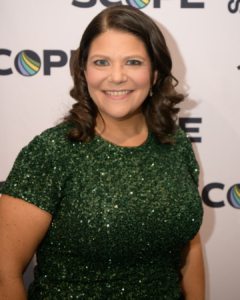
Molly Hott Gallagher, Executive Director of SCOPE
The Software Graveyard Every Nonprofit Recognizes
SCOPE had tried them all. From more modern platforms with fancy integrations to a text-to-giving platform that predated most of the tools on the market today. Some were abandoned by choice; others required multi-year contracts that locked the team into a platform they had already outgrown. “None of which proved to do it all, and none of which gave us the care and attention that Trellis did along the way,” Molly says flatly.
The pain was not just in the data reconciliation. It was everything surrounding the night itself. SCOPE’s donors, committee members, and volunteers wanted to see the fundraising thermometer climb in real time. They wanted names on the screen. They wanted to feel the energy of collective giving build through the room. But the platforms SCOPE had used either lacked that functionality entirely or made it so cumbersome to configure that it barely worked. Meanwhile, Heather’s post-event workload would balloon, because without a direct integration to Blackbaud Raiser’s Edge NXT — the CRM SCOPE has used for 25 years and 30,000 donor records — every transaction had to be moved by hand.
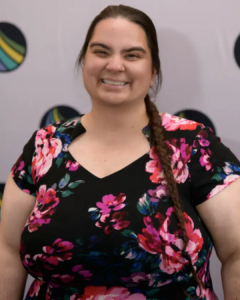
Heather O’Dell, Operations Manager, SCOPE
There was also the matter of in-person support. The year before switching, SCOPE had paid for an event day technician from their previous platform. That person sent an “after party” text to every single attendee hours before the event had even started. They didn’t know the organization, didn’t know the platform configuration, and, as Molly put it, “there was zero care.” The physical presence that was supposed to provide peace of mind had, instead, become the night’s most memorable mishap.
The Moment the Calculation Changed
The turning point was not a product demo. It was an integration.
When SCOPE discovered that Trellis had a direct, native connection to Blackbaud Raiser’s Edge NXT, something shifted. The question was no longer whether they could survive without day-of support, but whether the support they had been paying for was worth anything in the first place. Rebecca, their Trellis point of contact, walked them through how the platform worked, what remote support looked like on event day, and what would happen if something went wrong. It was enough.
“We weren’t going to allow that fear to drive us,” Molly says. “We were going to allow that fear to challenge us.”
They signed up for their 550-person benefit. They told themselves it would be one event.
What the Night Actually Looked Like

Guests walked in, said their name, and were through in seconds. By the end of the night, every single one of them had seen their name on the screen.
A donor lent SCOPE iPads and a laptop for the check-in station. Volunteers took their positions. Guests started arriving.
The check-in line moved. Really moved. When a guest walked up, a volunteer typed the first three letters of their name and the full record appeared. No hunting, no confusion, no line backing up into the venue entrance. Phone numbers captured during registration meant that when the fund-a-need moment came later in the night, texts landed directly on every guest’s phone. They could choose their giving level, tap to confirm, and see their name appear on the screen within seconds.
“Usually it would just be someone on stage and guests would raise their hands or write down on a card how much they wanted to give,” Heather recalls. “But this year, having it texted straight to their phone, they were able to just choose the donation level that was comfortable for them. And they saw their name up on the screen and the thermometer of how much we had raised that night.”
The thermometer effect was real. At a separate Midwest event SCOPE ran later in the year, the sponsor camper portion raised more money than it ever had. The visual feedback, the names, the momentum of watching numbers climb publicly, all of it created a giving environment that a hand-raise-and-card system simply cannot replicate.
“When it’s easier for them to give, it’s easier for us to raise more money for SCOPE.” — Heather O’Dell, Operations Manager, SCOPE
The silent auction opened without incident. When bidding closed, winners received their certificates directly from the platform, instantly. One team member who had previously spent hours the morning after an event manually emailing certificates got that time back entirely.
The Benefit They Didn’t Expect
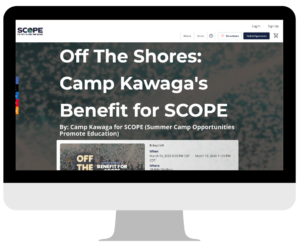
For the first time in 25 years of galas, building the event page wasn’t one person’s job. All five members of the SCOPE team had logged in, made updates, and called it their own, no developer, no specialist, no one person holding the whole thing together.
SCOPE came to Trellis for integration and hoping for a less painful night. What they got was something they had never really had before: a team-wide platform.
Before, event software was the domain of one or two people who knew the system well enough to muddle through. With Trellis, all five members of the SCOPE staff have logged in, built out event pages, updated sponsorship records, and created silent auction items on their own. No developer, no training program, no designated “platform person.” “Even without having the skillset to create a webpage or know how to develop a software plan like this,” Molly explains, “it’s that easy to plug and play for really any of us.”
That accessibility changed the organization’s relationship with its own events. What started as a single benefit became a golf event and cocktail party, a music event, a pickleball tournament, and eventually events run by partner camps that raise money for SCOPE camperships. The platform did not stay contained to the one use case they had signed up for. It expanded because the barrier to expanding it was low enough that the team simply did.
The data integration also quietly reorganized Heather’s calendar. Where reconciliation once stretched two weeks, it now runs on the Sunday payment processing cycle. The data flows directly into Raiser’s Edge, matched to the correct donor records, with gift amounts attached. “It matched the data correctly,” she says. “It went to the right, the correct donor, all the payments.” For an organization that depends on accurate donor data to steward a 30,000-record database built over 25 years, that is not a small thing.
The Detail That Doesn’t Make It Into the Brochure
Returning donors will not need to re-enter their information next year.
It sounds minor. It is not. When someone arrives at a SCOPE gala for the second or third year in a row, their phone number is already there. Their giving history is already connected. The check-in takes three keystrokes. That accumulated familiarity, a platform that remembers your donors the way your best volunteers do, is the kind of friction reduction that makes people more likely to give before the night’s first course is served.
What SCOPE Would Tell a Peer Organization
Twelve months after their first event on Trellis, SCOPE is not looking for another platform. They are referring partner organizations to this one.
“This is the first software platform that we have walked away from saying, I don’t have anything negative to say. And if I had some ideas for change, I know that they’d be open to hearing it.” — Molly Hott Gallagher, Executive Director, SCOPE
For any nonprofit that runs events and manages donor relationships in Raiser’s Edge, Molly’s advice is direct: the integration alone is worth the conversation. Add the fund-a-need thermometer, the self-serve check-in, the automatic certificate delivery, and a team that can all use it without a specialist in the room, and the calculus is straightforward.
SCOPE’s mission is putting children on the path to camp and beyond. The less time the team spends cleaning up event data, the more time they have for that. That, more than any feature list, is what changed.